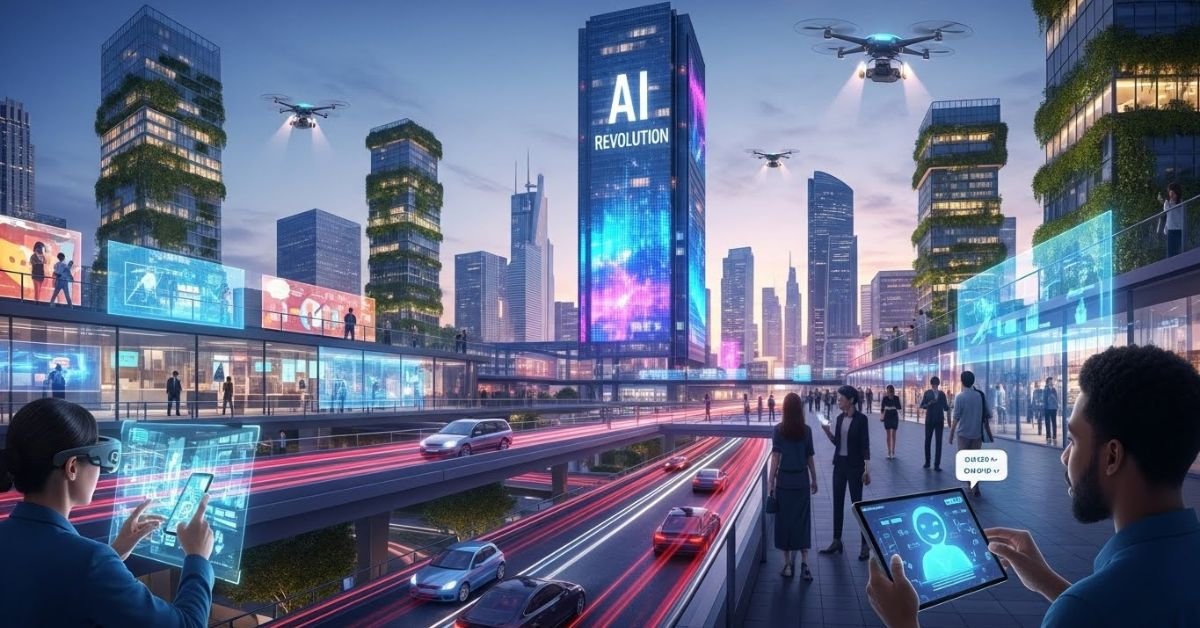

Artificial Intelligence (AI) is no longer a futuristic concept limited to movies or research labs. Today, it plays a quiet yet powerful role in shaping how we live, work, communicate, and make decisions. From smartphones and online shopping to healthcare and transportation, AI is transforming everyday life in ways many people don’t even realize.
This article explores how artificial intelligence is influencing daily routines, improving efficiency, and redefining modern living.
Understanding Artificial Intelligence in Simple Terms
Artificial Intelligence refers to computer systems designed to perform tasks that normally require human intelligence. These tasks include learning from data, recognizing patterns, understanding language, making decisions, and even predicting future outcomes.
Instead of being manually programmed for every action, AI systems improve over time by analyzing large amounts of information. This ability makes them incredibly useful in real-world applications.
AI in Smartphones and Personal Devices
Smartphones are one of the most common examples of AI in everyday use. Almost every modern phone relies on AI-driven features.
AI enhances:
- Camera quality by adjusting lighting and focus automatically
- Voice assistants that respond to spoken commands
- Battery optimization based on usage habits
- Predictive text and autocorrect while typing
These features save time and make devices more intuitive without requiring technical knowledge from users.
AI and Online Recommendations
Whether watching videos, shopping online, or reading articles, AI works behind the scenes to personalize content.
Platforms analyze:
- Search history
- Viewing behavior
- Likes, clicks, and time spent
Based on this data, AI suggests relevant content, making online experiences smoother and more engaging. Many informational platforms and digital resources, including sites like avtube.org, rely on intelligent algorithms to organize and present content in a user-friendly way.
AI in Healthcare and Wellness
Healthcare has seen significant improvements thanks to artificial intelligence. AI tools assist doctors by analyzing medical data faster and more accurately.
Key uses include:
- Early disease detection through imaging analysis
- Virtual health assistants for patient support
- Predictive analytics for treatment planning
- Wearable devices that monitor health metrics
These innovations help reduce human error and improve patient outcomes.
AI in Transportation and Navigation
Navigation apps use AI to provide real-time traffic updates, suggest faster routes, and estimate arrival times accurately. Ride-sharing services rely on AI to match drivers with passengers and optimize pricing.
Additionally, AI is driving advancements in autonomous vehicles, improving road safety and reducing accidents caused by human mistakes.
AI at Work and Productivity
Workplaces across industries are using AI to improve efficiency. From automated emails to data analysis, AI handles repetitive tasks, allowing humans to focus on creativity and strategy.
Common workplace applications:
- Smart scheduling tools
- Automated customer support chatbots
- Data-driven decision-making
- Fraud detection in finance
AI doesn’t replace human intelligence—it enhances it.
AI in Smart Homes
Smart homes are becoming more common, powered by artificial intelligence. AI-enabled devices learn user habits and adjust settings automatically.
Examples include:
- Smart thermostats that save energy
- Voice-controlled lighting systems
- Home security cameras with facial recognition
These systems improve comfort, safety, and energy efficiency.
Ethical Considerations and Challenges
Despite its benefits, AI raises important concerns. Privacy, data security, and algorithm bias are ongoing challenges. Responsible development and transparent policies are essential to ensure AI is used ethically and fairly.
As AI continues to evolve, balancing innovation with accountability will remain crucial.
The Future of AI in Everyday Life
Artificial Intelligence will continue to integrate deeper into daily activities. Future developments may include more advanced personal assistants, smarter healthcare solutions, and improved sustainability through intelligent systems.
The goal is not to replace humans but to support better decision-making and improve quality of life.
Conclusion
Artificial Intelligence has already become an essential part of everyday life, often working invisibly to make tasks easier, faster, and more efficient. From personal devices and healthcare to transportation and online platforms, AI is reshaping how we interact with the world.
As technology advances, understanding and adapting to AI will help individuals and businesses make the most of its potential.